What "natural" and "clean" actually mean on a cosmetic label
Published 6 August 2026Stratum editors
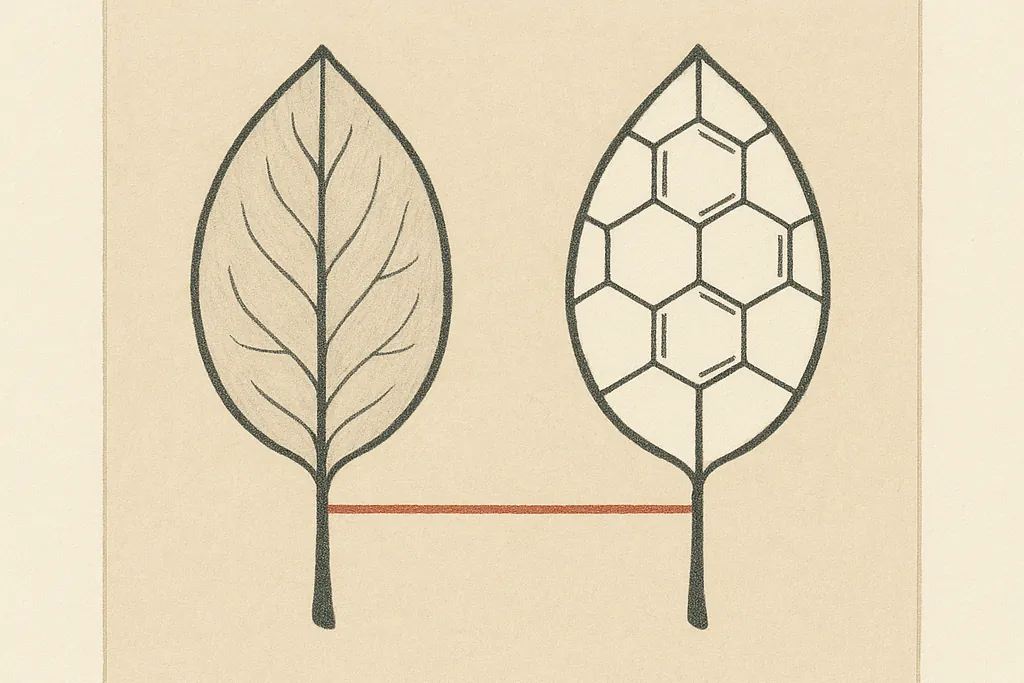
In New Zealand, the United States and the European Union, neither "natural" nor "clean" has a legal definition for cosmetics. The US Food and Drug Administration says so in writing — it "has not defined the term 'natural'"1 — and no New Zealand or EU instrument defines it either. The definitions that do exist are private: COSMOS, NATRUE and a growing number of retailer lists, each real, published and auditable, each meaning something different, none of them a safety rating. The most misread document in the field is ISO 16128, which reads like a standard but sets no threshold, certifies nothing, and rules claims and labelling out of its own scope in writing.
These words survive because they do two jobs at once. They describe where an ingredient came from, which is a checkable fact about a supply chain, and they imply how the product will behave on skin, which is a different question with a much weaker evidence base.
No jurisdiction has defined either word
The United States is the clearest case, because the agency has been asked often enough to have written the answer down. FDA's small-business fact sheet says that "FDA has not defined the term 'natural' and has not established a regulatory definition for this term in cosmetic labeling," and adds that "FDA also does not have regulations for the term 'organic' for cosmetics."1 A separate FDA page confirms that "organic" appears in neither the Federal Food, Drug, and Cosmetic Act nor the Fair Packaging and Labeling Act.2 The only federal definition of "organic" that reaches a moisturiser arrives sideways, from agriculture: the USDA's National Organic Program, 7 CFR Part 205, will certify a cosmetic made of agricultural ingredients if the growers, handlers and manufacturer are all certified.3
The European Union regulates cosmetic claims tightly but does not define this one. Article 20 of Regulation (EC) No 1223/20094 is implemented by Commission Regulation (EU) No 655/2013, which sets six common criteria for any claim: legal compliance, truthfulness, evidential support, honesty, fairness and informed decision-making.5 The accompanying technical document of 3 July 2017 adds annexes on "free from" and on "hypoallergenic", applicable from 1 July 2019.6 There is no annex on "natural"; the word is left to the general criteria, case by case.
New Zealand splits the question across two statutes. What may be in the bottle is set by the Environmental Protection Authority's Cosmetic Products Group Standard 2020 (HSNO approval HSR002552), issued under the Hazardous Substances and New Organisms Act 1996, whose schedules list prohibited and restricted ingredients and permitted colourants, preservatives and UV filters.7 It says nothing about adjectives. What may be printed on the front falls to the Fair Trading Act 1986, which prohibits misleading conduct and false representations about a product's composition, and separately prohibits unsubstantiated representations — claims made without reasonable grounds — whether or not they turn out to be true.8 The Commerce Commission's own fact sheet on that provision is blunt about the timing: a business "must have reasonable grounds for claims at the time they are made", and "substantiating a claim after it was made may not get you off the hook."25 Its Environmental Claims Guidelines of July 2020 apply the same reasoning to "organic" and "free-of" wording.9 That split has its own article here.
"Natural New Zealand skincare."
Nothing specific. Cosmetic Products Group Standard 2020 (HSR002552) governs what may be in the bottle, not adjectives. The claim falls to the Fair Trading Act 1986: it must not mislead, and the seller must hold reasonable grounds for it at the moment it is made.
What the certification standards actually require
Where the law is silent, private standards fill the space. Two dominate, and both publish their criteria in full.
The COSMOS-standard, version 4.0 of 1 January 2023, sorts every ingredient into five categories: water, minerals and ingredients of mineral origin, physically processed agro-ingredients, chemically processed agro-ingredients, and "other ingredients".10 Only the two agro-ingredient categories can be organic at all. For COSMOS ORGANIC, at least 95% of the physically processed agro-ingredients must be organic and at least 20% of the total product must be organic, dropping to 10% for rinse-off products, non-emulsified aqueous products and products at least 80% minerals. Because water cannot count as organic, 20% of a lotion is a far larger share of the non-water fraction than it sounds. COSMOS NATURAL sets no minimum organic content. The standard also polices the word directly: a product "must not be called 'organic', for example, 'organic shampoo', unless it is at least 95% organic, measured as a percentage of the total product."
The revealing part is what COSMOS counts as "natural origin": water, minerals, physically processed agro-ingredients and chemically processed agro-ingredients — ingredients deliberately chemically modified using the reactions in its permitted appendix. Heavy processing is not the disqualifier; the feedstock and the chemistry are. What is excluded is petrochemical moieties, capped at 2% of the finished product, plus petrochemical-origin preservatives and denaturants, permitted from a short named list and exempted from that cap.
NATRUE takes a different route. Since 1 January 2021 it certifies at two levels, natural and organic, and instead of one global percentage it publishes a table of thirteen product categories, each with a minimum content of natural substances and a maximum of derived natural substances.11 Oils and water-free cleaning and skin-care products must be at least 80% natural substances; water-in-oil skin-care emulsions and oleogels, 30%; oil-in-water emulsions and gels, and sunscreens, 10%; cleansing products containing surfactants, 3%, with up to 85% derived natural. Those low floors are chemistry rather than loophole — a surfactant cannot be a chemically unmodified plant material — but a certified "natural" body wash and a certified "natural" body oil have passed very different arithmetic. At the organic level, at least 95% of the natural and derived natural substances of plant and animal origin must come from certified organic farming or wild collection.
"Certified organic" with a USDA seal.
USDA National Organic Program, 7 CFR Part 205. Growers, handlers and the final manufacturer must each be certified by a USDA-accredited agent. FDA does not define the term for cosmetics.
ISO 16128 is a calculator, not a pass mark
ISO 16128 is the document most often cited as though it were the missing legal definition. Part 1, published in 2016, defines the ingredient categories.12 Part 2, published 15 September 2017, "describes approaches to calculate natural, natural origin, organic and organic origin indexes that apply to the ingredient categories defined in ISO 16128-1".13 Both carry the same sentence in their published scope, and it is the most important sentence in either: ISO 16128 "does not address product communication (e.g. claims and labelling), human safety, environmental safety and socio-economic considerations (e.g. fair trade), and the characteristics of packaging materials or regulatory requirements applicable for cosmetics."
The document whose number appears on the carton says, in its own scope, that it does not address labelling. It sets no minimum to pass, accredits no auditor and issues no mark. It is a method for producing a number, and the number is produced by whoever prints it.
The other thing to know about any such percentage is that water is normally inside it. COSMOS defines "natural origin" as, in this order, "water, minerals and ingredients of mineral origin, physically processed agro-ingredients, chemically processed agro-ingredients (and parts thereof) derived wholly from the above", and requires a certified product to declare its natural-origin percentage "by weight of the total product".10 A lotion is typically 60–80% water, so on that arithmetic the water alone contributes 60–80 percentage points before a single botanical is weighed. Add glycerin and a fatty-acid-derived emollient and a figure in the nineties follows from the rules rather than from the formula. NATRUE is the exception: it counts water toward its natural-substance percentage only when the water arrives inside a pressed vegetable juice.11
"98% natural origin (ISO 16128)."
ISO 16128-2:2017 sets no minimum to pass, involves no third party, and states in its own published scope that it does not address claims or labelling. Nothing in it obliges the seller to say how much of the figure is water.
Four words that are not synonyms
Most confusion on a shelf comes from treating these four as interchangeable.
| Term | Where it is actually defined, and how |
|---|---|
| Natural | No statutory definition anywhere. NATRUE: substances of botanic, "inorganic-mineral (not organic mineral, e.g. mineral oil)" or animal origin, recovered and processed by physical processes only, plus naturally occurring enzymatic and microbiological reactions whose end products are identical to those occurring in nature. (NATRUE v3.9)11 |
| Natural origin / naturally derived | Deliberate chemical modification permitted. COSMOS: water, minerals and ingredients of mineral origin, and both physically and chemically processed agro-ingredients are of natural origin; petrochemical moieties and petrochemical-origin preservatives are not. Covers most emulsifiers, surfactants and processed plant oils. (COSMOS v4.0)10 |
| Organic | Certified to EU Regulation 2018/848, the USDA National Organic Program or an equivalent recognised scheme. Water and minerals "cannot be calculated as organic" at all. (COSMOS v4.0)10 |
| Clean | No definition in any standard or statute. Means the specific exclusion list published by whoever is using the word.14 |
"Naturally derived" is the term doing the most quiet work. It is how a plant oil becomes an emulsifier and a sugar becomes a surfactant, and it is why a list can be dense with Latin binomials and still be the product of several deliberate chemical reactions. Reading the ingredient list is the only way to tell which is which.
The United States tried twice to define "natural"
The Natural Cosmetics Act, H.R. 5017, introduced on 8 November 2019 and referred to the Committee on Energy and Commerce, would have treated a cosmetic as misbranded for using the word "natural" unless it contained at least 70% natural substances other than water and salt, used no fragrance ingredient other than a natural or naturally derived one, and was not made using alkoxylation, deterpenation other than with steam, halogenation as the main reaction, ionizing radiation, sulphonation as the main reaction, ethylene oxide, or mercury.15 A second bill of the same name, H.R. 5872, introduced 4 November 2021, dropped the fixed percentage and directed FDA to write the definition after conducting consumer surveys.16 Neither was enacted, and the cosmetics law that did pass in 2022 did not touch the word.
In the absence of a definition the Federal Trade Commission enforces against the extremes. On 12 April 2016 it charged five sellers of skin-care, hair-care and sunscreen products with falsely promoting them as "all natural" or "100% natural" while they contained synthetics: dimethicone, phenoxyethanol, ethylhexylglycerin, polyethylene, polyquaternium-7 and polyquaternium-37 among them. Four settled; a complaint issued against the fifth. "'All natural' or '100 percent natural' means just that — no artificial ingredients or chemicals," said Jessica Rich, then director of the FTC's Bureau of Consumer Protection.17 The four consent orders were approved as final on 13 July 2016.18 Note the shape of that enforcement: it reaches absolute claims, not the bare word. The FTC's Green Guides at 16 CFR 260.4 separately advise that marketers "should not make unqualified general environmental benefit claims", because "it is highly unlikely that marketers can substantiate all reasonable interpretations of these claims"; the section's worked example is the brand name "Eco-friendly".19
"100% natural."
No FDA definition exists. Under the FTC Act the absolute form is read literally: in the April 2016 complaints a single synthetic — dimethicone in a sunscreen sold as "100% natural" — was enough.
"Clean" is whatever the seller has defined it to be
"Clean" never had even the pretence of a technical basis. It is an exclusion list, and the list belongs to whoever publishes it. The clearest statement of what the word legally carries comes from a United States court. In Finster v. Sephora USA, Inc. the plaintiff argued that products carrying a retailer's "clean" seal should have contained nothing synthetic or irritating. On 15 March 2024 Judge David N. Hurd of the Northern District of New York dismissed the complaint with leave to amend, holding that it "leaves the Court guessing as to how a reasonable consumer could mistake" the labelling "to reasonably believe that the cosmetics contain no synthetic or harmful ingredients whatsoever", and noting that the retailer's own wording promised only that products were "formulated without specific ingredients that are known or suspected to be potentially harmful to human health and/or the environment".14
That is the honest position, and it cuts both ways. A published exclusion list is a checkable claim and a seller can be held to it. What the word cannot carry is the inference drawn from it — that "clean" means non-irritating, non-synthetic or better evidenced. It means "does not contain the following", and the following differs at every retailer.
Europe is about to squeeze this. Directive (EU) 2024/825 adds two entries to the EU's blacklist of commercial practices that are unfair in all circumstances: "displaying a sustainability label that is not based on a certification scheme or not established by public authorities", and "making a generic environmental claim for which the trader is not able to demonstrate recognised excellent environmental performance relevant to the claim". Member States had to adopt the measures by 27 March 2026 and apply them from 27 September 2026.20
"Chemical-free" is a category error
The strongest version of the natural claim — that a product contains no chemicals — is not a strong claim but an impossible one. On 30 October 2008 the Royal Society of Chemistry offered a bounty: "I'd be happy to give a million pounds to the first member of the public who could place in my hands any material I consider 100% chemical free," said Dr Neville Reed, a director of the society, adding that if anyone succeeded, "we would have to tear up the textbooks, burn the degree certificates and retrain the teachers."21 Nobody collected. Water is a chemical, and so is every constituent of every plant extract.
Regulators handle the softer "free from" forms with more care than shoppers expect, mostly by protecting the ingredients rather than the consumer. The EU technical document says "free from" claims should not be allowed where they imply a denigrating message based on a presumed negative perception of an ingredient's safety, and gives the example outright: "the claim 'free from parabens' should not be accepted, because it is denigrating the entire group of parabens", with the same reasoning applied to phenoxyethanol.6 It also rules out "free from allergenic/sensitizing substances", because complete absence of the risk of an allergic reaction cannot be guaranteed. New Zealand's Commerce Commission adds that a "free-of" claim can mislead even when true, if the omitted ingredient is not commonly used in comparable products anyway.9 The wider family of these words has its own article.
The appeal to nature, tested in both directions
The premise underneath all of this is that plant-derived means gentle and synthetic means harsh. It is testable, and it fails both ways.
Oakmoss and treemoss absolutes — extracts of the lichens Evernia prunastri and Evernia furfuracea, used in perfumery for centuries — contain atranol and chloroatranol. Recital 1 of Commission Regulation (EU) 2017/1410 of 2 August 2017 records the conclusion of the EU's Scientific Committee on Consumer Safety, in its opinion of 26–27 June 2012, that these two and the synthetic HICC "should not be used in cosmetic products as they are the fragrance allergens which caused the highest number of contact allergies cases in past years". Recital 4 notes that atranol and chloroatranol "are natural components of oak tree moss (Evernia prunastri) and treemoss (Evernia furfuracea) extracts". The regulation moved all three to Annex II, the prohibited list: from 23 August 2019 products containing them could not be placed on the EU market, and from 23 August 2021 not made available on it at all.22 Two of the three substances the EU has banned as fragrance allergens are constituents of a lichen.
The clinical data point the same way. The North American Contact Dermatitis Group tested 3,056 patients across twelve centres in 2021–2022 against a standardised series of 80 allergens; 2,200 of them, 72.0%, reacted to at least one. Behind nickel and the preservative methylisothiazolinone, the third commonest positive in the series, at 10.1%, was hydroperoxides of linalool — oxidation products of a terpene alcohol occurring naturally in lavender, bergamot and many other essential oils. Positivity to hydroperoxides of limonene, from citrus peel, rose significantly against 2019–2020 (P < 0.001). The authors' conclusion is the one worth carrying out of the shop: "Fragrance allergy is still very common, but the composition of fragrance allergy markers appears to be changing."23
- Study
- Houle MC, DeKoven JG, Atwater AR, et al. "North American Contact Dermatitis Group Patch Test Results: 2021–2022." Dermatitis 2025;36(5):464–476. PMID 40274377
- Design
- Multicentre patch-test series, 12 North American centres, 2021–2022, standardised screening panel of 80 allergens
- Participants
- 3056 patients patch tested; 2200 (72.0%) had at least one positive reaction, and 1412 (46.6%) had a primary diagnosis of allergic contact dermatitis
- Result
- Hydroperoxides of linalool positive in 10.1%, third in the series behind nickel sulfate hexahydrate (24.9%) and methylisothiazolinone (11.5%); cobalt chloride 9.2%, MCI/MI 9.0%. Hydroperoxides of limonene rose significantly against 2019–2020
- Certainty
- moderate a patch-test referral population, so these rates overstate prevalence in the general public; the ranking among the allergens tested is robust, the absolute percentages are not generalisable
Now the synthetic side. White petrolatum is a fossil-fuel derivative and is ineligible under both private standards: NATRUE's definition of a natural substance admits inorganic-mineral material but expressly not "organic mineral, e.g. mineral oil",11 and COSMOS allows no ingredient carrying a petrochemical moiety unless it is named in its own short appendix, which petrolatum is not.10 It is also the standard vehicle in which other allergens are dispersed for patch testing — which is why patch-test concentrations are quoted "in petrolatum" — and it earns that role by being close to inert. A retrospective analysis of German-language clinic network data covering 1992–2004 found that of 79,365 patients patch tested with pure petrolatum, 27 produced a "+" reaction (0.03%) and two a "+++" (0.003%). The authors concluded that this "is in agreement with considering petrolatum as a non-sensitizer".24
- Study
- Schnuch A, Lessmann H, Geier J, Uter W. "White petrolatum (Ph. Eur.) is virtually non-sensitizing." Contact Dermatitis 2006;54(6):338–343. PMID 16787456
- Design
- Retrospective analysis of patch-test data, Information Network of Departments of Dermatology (IVDK), 1992–2004
- Participants
- 79365 patients patch tested with pure petrolatum at German-speaking dermatology departments
- Result
- 27 "+" reactions (0.03%) and 2 "+++" (0.003%); most non-negative readings were doubtful or mild irritant, and reaction indices suggested many "+" readings were irritant rather than allergic
- Certainty
- moderate observational clinic data with no randomised comparator, but the denominator is very large and the direction of the finding is unambiguous
Neither result licenses the opposite prejudice. Petrolatum being non-sensitising says nothing about dimethicone, and linalool hydroperoxides being a common allergen says nothing about shea butter. That is the point: origin does not predict skin response. Concentration, chemical identity, oxidation state and an individual's sensitisation history do. Fragrance is where that matters most, distilled or synthesised alike, which is why it gets its own treatment here.
What the words are still good for
A certification mark is worth something, provided the reader knows which one it is. COSMOS ORGANIC, COSMOS NATURAL and the two NATRUE levels are certified by a third party against published criteria covering sourcing, permitted chemistry, permitted processes and organic provenance. If those matter to a buyer for agricultural, environmental or ethical reasons, the marks deliver what they say. What none delivers is a prediction about irritation, and none claims to.
An uncertified "natural", a self-declared ISO percentage and any "clean" seal are statements by the seller about the seller's own definition. They can still be true — and in New Zealand the seller must hold reasonable grounds for them — but they are not comparable across brands, because there is no shared unit. For anyone with a known contact allergy none of these words is usable. The ingredient list is, and it is the only thing on the pack that is. How a claim earns a place on this site is set out in the method.
Where the evidence stops
- No controlled study has compared rates of irritant or allergic reaction between certified natural or organic cosmetics and conventional ones. The comparison that would settle the argument has not been run.
- No regulator has established what shoppers actually infer from "natural", "natural origin" and "clean". H.R. 5872 would have required FDA to run exactly those surveys before defining the terms; the bill died, so they were never run.
- No one has published, for any representative set of products, how much of an advertised "natural origin" percentage is water. Without that, a 95% figure on one carton and a 70% figure on another cannot be compared.
- Retailer "clean" lists are not harmonised and their overlap has not been quantified, so it is unknown how many products would qualify under one and fail another.
- The NACDG figures come from patients referred for patch testing. Population-level sensitisation rates to linalool and limonene hydroperoxides in New Zealand are not established.
- Whether Directive (EU) 2024/825 changes how these words are used outside the EU, in markets that receive the same products, is not yet known.
Sources
- US Food and Drug Administration. "Small Businesses & Homemade Cosmetics: Fact Sheet." Content current as of 18 November 2025. fda.gov
- US Food and Drug Administration. "‘Organic’ Cosmetics." Content current as of 25 February 2022. fda.gov
- US Department of Agriculture, Agricultural Marketing Service. "Cosmetics, Body Care, and Personal Care Products." National Organic Program, 7 CFR Part 205. Accessed 6 August 2026. ams.usda.gov
- Regulation (EC) No 1223/2009 of the European Parliament and of the Council of 30 November 2009 on cosmetic products. eur-lex.europa.eu
- Commission Regulation (EU) No 655/2013 of 10 July 2013 laying down common criteria for the justification of claims used in relation to cosmetic products. eur-lex.europa.eu
- Sub-Working Group on Claims, endorsed by the Working Group on Cosmetic Products. "Technical document on cosmetic claims," version of 3 July 2017; Annexes III and IV applicable from 1 July 2019. ec.europa.eu
- Environmental Protection Authority (New Zealand). "Cosmetic Products Group Standard 2020 — HSR002552," consolidated and current, effective 1 January 2026. Issued under the Hazardous Substances and New Organisms Act 1996. epa.govt.nz
- Fair Trading Act 1986 (New Zealand), Part 1: misleading and deceptive conduct, false representations, and unsubstantiated representations. New Zealand Legislation, Parliamentary Counsel Office. legislation.govt.nz
- Commerce Commission New Zealand. "Environmental Claims Guidelines: a guide for traders," July 2020. comcom.govt.nz
- COSMOS-standard AISBL. "COSMOS Standard Criteria, Version 4.0," 1 January 2023. cosmos-standard.org
- NATRUE. "NATRUE Label criteria: requirements to be met by natural and organic cosmetics, Version 3.9," 1 January 2021. natrue.org
- ISO 16128-1:2016. "Guidelines on technical definitions and criteria for natural and organic cosmetic ingredients and products — Part 1: Definitions for ingredients." International Organization for Standardization, 2016. iso.org
- ISO 16128-2:2017. "Cosmetics — Guidelines on technical definitions and criteria for natural and organic cosmetic ingredients — Part 2: Criteria for ingredients and products." International Organization for Standardization, September 2017. iso.org
- Finster v. Sephora USA, Inc., No. 6:22-cv-01187 (N.D.N.Y.), Decision and Order of Hurd J., 15 March 2024. courtlistener.com
- H.R. 5017, Natural Cosmetics Act, 116th Congress, introduced 8 November 2019. US Government Publishing Office. govinfo.gov
- H.R. 5872, Natural Cosmetics Act, 117th Congress, introduced 4 November 2021. US Government Publishing Office. govinfo.gov
- Federal Trade Commission. "Four Companies Agree to Stop Falsely Promoting Their Personal-Care Products as ‘All Natural’ or ‘100% Natural’; Fifth is Charged in Commission Complaint," press release, 12 April 2016. ftc.gov
- Federal Trade Commission. "FTC Approves Four Final Orders Barring Companies from Making False All-Natural Claims," press release, 13 July 2016. ftc.gov
- 16 CFR § 260.4, "General environmental benefit claims," Guides for the Use of Environmental Marketing Claims (Green Guides). Electronic Code of Federal Regulations, accessed 6 August 2026. ecfr.gov
- Directive (EU) 2024/825 of the European Parliament and of the Council of 28 February 2024 on empowering consumers for the green transition. Transposition by 27 March 2026; application from 27 September 2026. eur-lex.europa.eu
- Royal Society of Chemistry. "£1,000,000 for 100% chemical free material?" Press release, 30 October 2008 (archived). web.archive.org
- Commission Regulation (EU) 2017/1410 of 2 August 2017 amending Annexes II and III to Regulation (EC) No 1223/2009 on cosmetic products, citing SCCS opinion SCCS/1459/11 of 26–27 June 2012. eur-lex.europa.eu
- Houle MC, DeKoven JG, Atwater AR, Reeder MJ, Warshaw EM, et al. "North American Contact Dermatitis Group Patch Test Results: 2021–2022." Dermatitis, September–October 2025;36(5):464–476. PMID 40274377. pubmed.ncbi.nlm.nih.gov
- Schnuch A, Lessmann H, Geier J, Uter W. "White petrolatum (Ph. Eur.) is virtually non-sensitizing. Analysis of IVDK data on 80 000 patients tested between 1992 and 2004." Contact Dermatitis, June 2006;54(6):338–343. PMID 16787456. pubmed.ncbi.nlm.nih.gov
- Commerce Commission New Zealand. "Fair Trading Act: Unsubstantiated representations," fact sheet, July 2018. comcom.govt.nz