What topical skincare can and cannot do
Published 6 August 2026Stratum editors
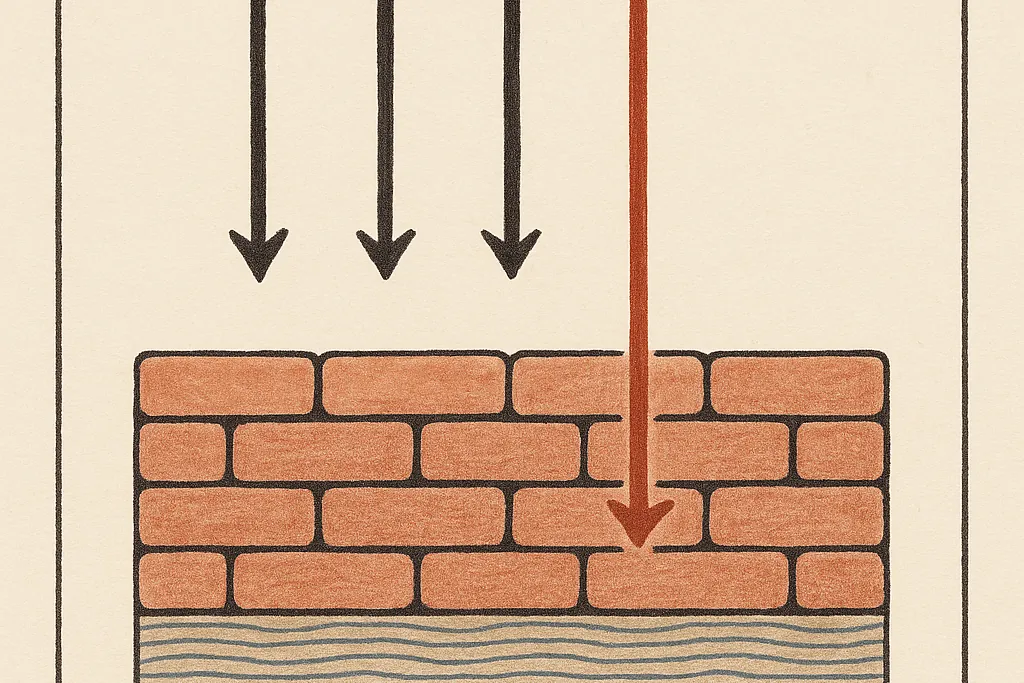
The outermost layer of skin is a barrier that works, and almost everything a cosmetic contains stays on the wrong side of it. That single fact is the ceiling on topical skincare: products can hydrate the surface, hold water in, block ultraviolet light, and — for a short list of small molecules at real concentrations — change how the living skin below behaves. They cannot deliver a large molecule such as intact collagen into the dermis, and no amount of formulation language changes the physics.
The interventions that reliably reach past the barrier are procedures rather than products: lasers, needling, deep peels and injections. They have their own evidence problems, their own risks, a clinician and a bill.
The argument on this page is not that skincare is useless. It is that the useful things it does are a much shorter and much more boring list than the front of a jar suggests, and that the boundary between the two is not a matter of opinion. It is set by a piece of tissue about as thick as a sheet of kitchen foil.
The barrier is the ceiling, and it is a good barrier
Skin's outermost layer, the stratum corneum, is described in the delivery literature as a brick-and-mortar structure: the bricks are dead, flattened corneocytes packed with cross-linked keratin, and the mortar is a densely ordered lipid matrix arranged largely in bilayers.1 The layer is 10 to 20 µm thick.1 A 2022 review of topical and transdermal delivery describes the same arrangement — terminally differentiated cells embedded in tightly packed lipid lamellae, "in a structural arrangement analogous to a 'brick and mortar wall'".2
The mortar is not ordinary cell membrane. The intercellular lipids that build those bilayers are ceramides, cholesterol and fatty acids, with ceramides the major constituent, and it is the loss of exactly those lipids that damages the water barrier and produces dry skin.5 The surface is also acidic: a multicentre study of 330 people measured a mean skin surface pH of 5.12, falling to 4.93 after a day without washing or applying anything, from which the authors estimated a natural surface pH of about 4.7.4 The layer is not static, either — corneocytes are continuously shed from the top and replaced from below, which is why anything that merely sits on the surface has a short tenancy.
All of this is worth stating plainly because the marketing frame runs the other way. A great deal of cosmetic copy treats the barrier as damage to be overcome — something to be "penetrated", "delivered through" or "repaired" — when in healthy skin it is functioning equipment doing the job that keeps a person from desiccating. A product that genuinely got large molecules through it at scale would not be a cosmetic. It would be a drug delivery system, and it would be regulated as one.
There are three routes in, and one of them does most of the work
Passive movement across the stratum corneum happens by three routes: intercellular, winding between the lipid lamellae; transcellular, straight through the corneocytes and the lipid matrix in turn; and trans-appendageal, down hair follicles and sweat ducts.2 In practice, transport across the layer typically means diffusion through the intercellular lipids, along a path that winds tortuously around the corneocytes.1 The follicular route is real and is of live research interest, particularly for particles, but appendages occupy a small share of the skin surface and are not the main road.
What survives that journey has a recognisable profile. Successful transdermal drugs have molecular masses of only up to a few hundred daltons, partition coefficients that heavily favour lipids, and doses measured in milligrams per day or less.1 The 2022 review puts the rules of thumb more explicitly: an optimal octanol–water log P between 1 and 3, a relatively low molecular mass under 500 Da, and a low melting point.2 A molecule that is too water-loving will not enter the lipid mortar; one that is too oil-loving will enter it and stay there rather than moving on into living tissue.
The 500-dalton figure is a rule of thumb from one paper, not a law
The number gets quoted as though it were a constant of nature. It is not. It comes from a 2000 paper in Experimental Dermatology by Bos and Meinardi at the University of Amsterdam, which proposed that a compound's molecular weight must be under 500 daltons to allow skin absorption, and argued the case from three observations: that virtually all common contact allergens are under that weight, that the topical dermatological agents in ordinary clinical use are under it, and that all then-known transdermal drugs were under it.3 The paper's own recommendation was to restrict development of new topical compounds to that range.3
That is an argument from the observed distribution of things that work, not a measured cut-off, and it should be read as a heuristic with soft edges. Absorption falls off steeply with size rather than stopping at a threshold; formulation, occlusion, the vehicle, damaged or inflamed skin and site of application all move the line. But the heuristic is robust enough to do the job it is used for here. Any claim that a large molecule crosses intact skin in useful amounts is a claim against a strong prior, and the burden of proof sits with the claim.
What clears the bar: water, light and a short list of small molecules
Three categories of topical do work, and it is worth being exact about what "work" means in each.
Moisturisers work on the surface, which is where the problem is. The standard taxonomy divides them into occlusives, which physically block water loss by laying a hydrophobic layer over the stratum corneum; humectants, which are hygroscopic and draw water in; and emollients, lipids and oils that improve softness and flexibility.5 The size ordering is stark: that review reports petrolatum at a minimum concentration of 5% reducing transepidermal water loss by more than 98%, and lanolin, mineral oil and silicones reducing it by 20–30%.5 Glycerol is described in the same review as the most effective humectant.5 None of this requires anything to penetrate anywhere, which is precisely why it is the best-established thing a cosmetic does. The largest body of controlled evidence for moisturisers comes from eczema rather than from cosmetic use — Cochrane's 2017 review pooled 77 randomised trials and 6,603 participants — and it found benefit while grading the certainty outcome by outcome, from very low to high.6
- Study
- van Zuuren EJ, Fedorowicz Z, Christensen R, Lavrijsen A, Arents BWM. "Emollients and moisturisers for eczema." Cochrane Database of Systematic Reviews, 2017. CD012119. PMID 28166390.
- Design
- Systematic review of randomised controlled trials, mean trial duration 6.7 weeks
- Participants
- 6,603 across 77 trials, mean age 18.6 years, people with eczema
- Result
- Moisturisers versus no moisturiser gave lower SCORAD severity (3 studies, 276 participants, mean difference −2.42, 95% CI −4.55 to −0.28; low-quality evidence) and fewer flares (2 studies, 87 participants, RR 0.40, 95% CI 0.23 to 0.70). Against vehicle, placebo or no treatment, investigator-assessed severity was lower (12 studies, 1,281 participants, SMD −1.04, 95% CI −1.57 to −0.51; high-quality evidence) and flares fewer (6 studies, 607 participants, RR 0.33, 95% CI 0.17 to 0.62; moderate-quality evidence).
- Certainty
- moderate the review itself grades outcome by outcome, from very low to high, and most trials were short, industry-linked and in eczema rather than healthy skin
Sunscreen is the best-evidenced preventive topical there is, and the evidence is for prevention over years rather than improvement over weeks. The Nambour trial in Queensland randomised community adults to daily versus discretionary sunscreen and followed skin microtopography for four and a half years, with blinded assessment.7 It is not a cosmetic result; it is the one place where an ordinary bathroom product has been shown in a randomised trial to slow visible skin ageing. What the SPF number on the front actually certifies, and why New Zealand made that testing mandatory, is a separate subject covered in the article on SPF and the New Zealand sunscreen standard.
- Study
- Hughes MCB, Williams GM, Baker P, Green AC. "Sunscreen and prevention of skin aging: a randomized trial." Annals of Internal Medicine, 4 June 2013. PMID 23732711.
- Design
- Randomised, controlled, community-based intervention, 4.5 years (1992–1996), blinded outcome assessment
- Participants
- 903 adults under 55, Nambour, Queensland, Australia (latitude 26°S)
- Result
- Skin ageing from baseline to end of trial was 24% less in the daily sunscreen group than in the discretionary group (relative odds 0.76, 95% CI 0.59–0.98). β-carotene supplementation had no overall effect.
- Certainty
- moderate a single trial, at one subtropical latitude, with a surrogate outcome (skin microtopography) and unblinded participants applying the intervention themselves
A short list of actives changes the living skin below. Retinoids are the clearest case: they are small, lipophilic and have been through decades of vehicle-controlled trials in photodamaged skin. A 2025 systematic review and meta-analysis pooled eight randomised trials of tretinoin and found consistent but modest improvements against vehicle, along with a threefold increase in the odds of an adverse event — dryness, erythema, peeling, burning and stinging, mostly in the early weeks.8 Vitamin C and niacinamide belong in the same conversation with different evidence bases; all three are examined in detail in the article on actives with real evidence.
- Study
- Huang HY, Lee LTJ. "Tretinoin for photodamaged facial skin: systematic review and meta-analysis of randomized controlled trials." Dermatology Practical & Conceptual, 2025;15(4):e20255172. PMID 41236273.
- Design
- Systematic review and meta-analysis of randomised controlled trials; follow-up 16 weeks to 2 years
- Participants
- 1,361 patients across 8 trials, median age range 29–76
- Result
- Fine wrinkles improved against vehicle (mean difference 0.412, 95% CI 0.233–0.590, p<0.001) and coarse wrinkles less so (MD 0.245, 95% CI 0.119–0.370). Patient self-assessment favoured tretinoin (MD 0.270, 95% CI 0.033–0.508). Adverse events were markedly more common (OR 3.140, 95% CI 1.819–5.419).
- Certainty
- moderate the authors report evidence of publication bias in the fine-wrinkle trials, variability in formulation and dose, and almost no follow-up beyond two years
Note what these three have in common. The effect sizes are real and small, the outcomes are measured on graded scales rather than transformations, and every one of them took months. Nothing in this category behaves like the before-and-after photograph.
Botanical extracts mostly work less than the label implies
The commonest gap between promise and physics is not fraud. It is concentration. Ingredient lists are ordered by weight only down to one percent: under the United States labelling rule, ingredients present at a concentration not exceeding 1% may be listed in any order after those present at more than 1%, and colour additives in any order after that.9 Below that line the sequence carries no information at all, so a celebrated plant extract can sit near the top of the tail and still be present at a fraction of a percent, whatever the front of the pack implies. That mechanic, and how to read it, is set out in the guide to reading an INCI list.
Two things follow. First, an extract studied at a laboratory concentration in a dish tells you very little about the same extract at 0.1% in a lotion, because the exposure is not comparable and the barrier was not in the dish. Second, "less than advertised" is not "nothing": plant oils are emollients and behave as emollients regardless of provenance, and some botanical constituents are small enough to cross. The specific New Zealand ingredients this address is associated with are worked through one at a time in the botanicals reference, and for several of them the honest certainty label is not established.
Topical collagen is the cleanest example of a claim that cannot work as stated
Collagen is worth singling out because the arithmetic is unusually clean. A single type I collagen triple helix is a rod under 2 nm in diameter and roughly 300 nm long.10 A 2025 review of collagen hydrolysates in cosmetic formulation puts native collagen at "a high molecular weight of around 300–400 kDa", which is why it is insoluble in water and oils.11 Set that against a 500-dalton rule of thumb3 and the conclusion is not marginal: intact collagen applied to skin is several orders of magnitude too large to cross the stratum corneum, and a jar of it cannot be replacing the collagen in anyone's dermis.
The fair version of the story is more interesting than the debunk. Cosmetic collagen is usually hydrolysed — broken by chemical or enzymatic treatment into smaller peptides, typically up to about 10 kDa, with the fish hydrolysate in that review averaging 7.5 kDa.11 Fragments below 500 Da are, the same review notes, well absorbed, unlike native collagen.11 But most of a typical hydrolysate is nowhere near that small, and being absorbed is not the same as arriving somewhere useful and doing something measurable once there.
What collagen and its hydrolysates demonstrably do is act on the surface. They have excellent water-binding capacity, and the resulting occlusion reduces transepidermal water loss and forms a protective film on the skin.11 In other words, topical collagen is a decent humectant and film-former sold as a structural repair. The product is not inert and the customer is not defrauded of all value; the mechanism on the box is simply not the mechanism in the jar.
The label rules do not require the claim to be true
Two regulators, two ways of drawing the same line, and neither of them audits efficacy the way readers assume.
"Rebuilds collagen." "Repairs the skin barrier." "Regenerates at the cellular level."
United States: the Federal Food, Drug, and Cosmetic Act defines a cosmetic at §201(i) by intended use — cleansing, beautifying, promoting attractiveness or altering appearance. A product intended for a therapeutic use, or to affect the structure or function of the body, is a drug under §201(g). The FDA states that cosmetic products and ingredients do not need premarket approval, with the exception of colour additives, and that the legal responsibility for a product's safety sits with the company that manufactures or markets it.12
"Treats rosacea." "Clinically proven to heal." Sold as a cosmetic, in a cosmetics aisle.
New Zealand: cosmetics containing hazardous substances sit under the Cosmetic Products Group Standard 2020 (HSNO approval HSR002552), made under the Hazardous Substances and New Organisms Act 1996 and administered by the Environmental Protection Authority. It governs prohibited and restricted ingredients, colourants, preservatives and UV filters — what may be in the bottle. Products carrying therapeutic claims fall instead under the Medicines Act 1981 and Medsafe.13
The practical consequence is the same on both sides of the Pacific. The rules police composition, safety and wording. They do not require a manufacturer to show that a cosmetic claim is true before the product is sold, which is exactly why a page like this one has to go to the trial literature instead of to the packaging. How a claim gets onto this site, and what the certainty labels mean, is set out in the method.
Past the barrier, the intervention stops being a product
The honest boundary is this: the treatments that reliably act below the stratum corneum do so by breaching it — with light, needles, acid at professional depth, or a syringe. That is a categorical change, not a stronger version of skincare. It brings a clinician, a consent conversation, downtime, a risk of scarring, infection and post-inflammatory pigmentation, and a bill.
One class of line sits outside the barrier argument altogether. A horizontal forehead line is made by the frontalis muscle contracting underneath the skin, so the reason no cream removes it has nothing to do with molecular weight — the target is not in the skin at all. The intervention that does address it is a prescription injection that relaxes that muscle, described in the vocabulary of a drug rather than a formulation: a clinic's page on treating forehead lines with botulinum toxin quotes a dose in units and a duration in months, which is not language a jar can use. A moisturiser can change how the skin around such a line looks. It cannot stop a muscle from moving.
Breaching the barrier does not bring better evidence, either. Cochrane's review of interventions for acne scars — 24 randomised trials, 789 adults — found moderate-quality evidence favouring injectable fillers over placebo, and broadly comparable results between fractional laser, chemical peeling, fractional radiofrequency and skin needling. Almost everything else in it is graded very low quality, often on a single small study. Its overall verdict was blunt: there is a lack of high-quality evidence because of poor methodology, underpowered studies and inconsistent outcome measures, and the results "do not provide support for the first-line use of any intervention".14 The review also records that chemical peeling was not tolerable for 7 of the 43 participants who received it, or 16%.14
- Study
- Abdel Hay R, Shalaby K, Zaher H, Hafez V, Chi C-C, Dimitri S, Nabhan AF, Layton AM. "Interventions for acne scars." Cochrane Database of Systematic Reviews, 2016. CD011946. PMID 27038134.
- Design
- Systematic review of randomised controlled trials of laser, peeling, needling, radiofrequency and fillers
- Participants
- 789 adults across 24 trials
- Result
- Injectable fillers beat placebo for scar improvement at week 24 (RR 1.84, 95% CI 1.31 to 2.59; n = 147; moderate-quality evidence). Fractional laser beat non-fractional non-ablative laser on participant-reported improvement in a single study (RR 4.00, 95% CI 1.25 to 12.84; n = 64; very low-quality evidence), and was comparable to fractional radiofrequency and to peeling combined with needling. Chemical peeling was not tolerable in 7 of 43 participants (16%).
- Certainty
- low the review names poor methodology, underpowered studies, non-standardised improvement scales and differing baselines, and declines to endorse any first-line intervention
Microneedling is the procedure closest to the consumer end of this spectrum, and the pattern repeats. A 2021 systematic review in the International Wound Journal collected nine randomised controlled trials of microneedling for atrophic scars, found consistent efficacy signals with no serious adverse effects reported, and concluded that larger trials with longer follow-up are still needed to validate it.15 That is a defensible reason to consider a procedure. It is not the same standard of proof as the sunscreen trial above, and a reader deciding between a serum and a course of treatment deserves to know which claim rests on what.
- Study
- Sitohang IBS, Sirait SAP, Suryanegara J. "Microneedling in the treatment of atrophic scars: a systematic review of randomised controlled trials." International Wound Journal, October 2021;18(5):577–585. PMID 33538106.
- Design
- Systematic review of randomised controlled trials, no pooled meta-analysis
- Participants
- 9 randomised trials of microneedling alone or combined with other modalities, in atrophic acne scarring; the review reports no pooled participant total
- Result
- All modalities showed microneedling to be efficacious for atrophic acne scars; no serious adverse effects were reported in any included study.
- Certainty
- low small samples, short follow-up, heterogeneous comparators and no pooled estimate; the authors themselves call for larger trials before the effect is treated as established
The other half of that comparison is cost, and this is a place where an article can easily mislead by inventing a range. Prices vary by country, city, operator and device, and a made-up figure would be worse than none. Most clinics decline to publish any figure at all, reserving it for a consultation, so no honest single number exists to print here. The number that matters is the one a local clinic quotes for a full course, in writing, before anything is booked — and it should be asked for in those terms, because a per-session price and a course price are different questions.
The comparison is still the whole point. A course of a procedure carries a practitioner, a consent form and a real complication rate, and is measured in trials of the kind set out above. That is the comparison worth making before anyone spends anything, in either direction.
How to use the ceiling
A serviceable test for any topical claim has three questions. What is the active, and roughly how big is it — because if it is a protein, a polysaccharide or anything described in kilodaltons, it is working on the surface or not at all. Where does it sit on the ingredient list relative to the preservative, because that bounds the concentration. And what was the outcome in the trial, measured how, over how long, against what control.
Applied honestly, that test leaves a shorter shelf and a clearer one. Sunscreen, daily, for prevention. A moisturiser chosen for its occlusive and humectant content rather than its hero extract. A small number of actives with trial evidence, used for months, accepting that the effects are modest and the irritation is real. Everything else is optional, and a good deal of it is pleasant, which is a legitimate reason to buy something — just not the reason printed on the box.
Where the evidence stops
- The 500-dalton figure has never been established as a measured threshold. Bos and Meinardi derived it from the distribution of compounds already known to work, and nobody has since published a cut-off that holds across vehicles, sites and skin conditions.
- How much any given cosmetic vehicle changes penetration in ordinary use is largely unmeasured. Occlusion, surfactants and solvents demonstrably alter delivery in laboratory conditions; the effect of a specific commercial formulation on a specific consumer's forearm is not something the label reports or the manufacturer is required to test.
- Whether the peptide fragments in a hydrolysed collagen product produce any measurable change in dermal collagen has not been shown in adequately controlled human trials. The film-forming and water-binding effects are documented; the structural claim is not.
- No trial has compared a good topical routine against a course of procedures for the same outcome in the same participants, so the trade-off a reader is actually making — money and downtime against effect size — has no direct evidence behind it in either direction.
- Long-term outcomes for microneedling and for most energy-based devices are essentially unstudied beyond a year or two; the acne-scar literature is short-horizon and the durability of the improvement is unknown.
- The sunscreen photoageing result comes from one randomised trial, in one subtropical population, with a surrogate outcome. It has not been replicated at other latitudes or in other skin types, and it is much stronger evidence than anything else in this article notwithstanding.
Sources
- Prausnitz MR, Langer R. "Transdermal drug delivery." Nature Biotechnology, November 2008;26(11):1261–1268. pmc.ncbi.nlm.nih.gov/articles/PMC2700785
- Iliopoulos F, Sil BC, Evans CL. "The role of excipients in promoting topical and transdermal delivery: current limitations and future perspectives." Frontiers in Drug Delivery, 2022;2:1049848. frontiersin.org
- Bos JD, Meinardi MMHM. "The 500 Dalton rule for the skin penetration of chemical compounds and drugs." Experimental Dermatology, June 2000;9(3):165–169. PMID 10839713. pubmed.ncbi.nlm.nih.gov/10839713
- Lambers H, Piessens S, Bloem A, Pronk H, Finkel P. "Natural skin surface pH is on average below 5, which is beneficial for its resident flora." International Journal of Cosmetic Science, October 2006;28(5):359–370. PMID 18489300. pubmed.ncbi.nlm.nih.gov/18489300
- Sethi A, Kaur T, Malhotra SK, Gambhir ML. "Moisturizers: the slippery road." Indian Journal of Dermatology, May–June 2016;61(3):279–287. PMID 27293248. pmc.ncbi.nlm.nih.gov/articles/PMC4885180
- van Zuuren EJ, Fedorowicz Z, Christensen R, Lavrijsen A, Arents BWM. "Emollients and moisturisers for eczema." Cochrane Database of Systematic Reviews, 6 February 2017, CD012119. PMID 28166390. pubmed.ncbi.nlm.nih.gov/28166390
- Hughes MCB, Williams GM, Baker P, Green AC. "Sunscreen and prevention of skin aging: a randomized trial." Annals of Internal Medicine, 4 June 2013;158(11):781–790. PMID 23732711. pubmed.ncbi.nlm.nih.gov/23732711
- Huang HY, Lee LTJ. "Tretinoin for photodamaged facial skin: systematic review and meta-analysis of randomized controlled trials." Dermatology Practical & Conceptual, 2025;15(4):e20255172. PMID 41236273. pubmed.ncbi.nlm.nih.gov/41236273
- United States Food and Drug Administration. "Cosmetics labeling guide" — order of ingredient declaration, 21 CFR 701.3(f)(2). Accessed 6 August 2026. fda.gov
- Shoulders MD, Raines RT. "Collagen structure and stability." Annual Review of Biochemistry, 2009;78:929–958. PMID 19344236. pmc.ncbi.nlm.nih.gov/articles/PMC2846778
- Egner P, Pavlačková J, Sedlaříková J, Matošková L, Mokrejš P, Janalíková M. "Collagen hydrolysates from animal by-products in topical cosmetic formulations." International Journal of Molecular Sciences, 19 March 2025;26(6):2776. PMID 40141417. pmc.ncbi.nlm.nih.gov/articles/PMC11942810
- United States Food and Drug Administration. "FDA authority over cosmetics: how cosmetics are not FDA-approved, but are FDA-regulated." Federal Food, Drug, and Cosmetic Act §201(i) and §201(g). Accessed 6 August 2026. fda.gov
- New Zealand Environmental Protection Authority. "Cosmetics" — Cosmetic Products Group Standard 2020, HSNO approval HSR002552, under the Hazardous Substances and New Organisms Act 1996. Accessed 6 August 2026. epa.govt.nz
- Abdel Hay R, Shalaby K, Zaher H, Hafez V, Chi C-C, Dimitri S, Nabhan AF, Layton AM. "Interventions for acne scars." Cochrane Database of Systematic Reviews, 3 April 2016, CD011946. PMID 27038134. pubmed.ncbi.nlm.nih.gov/27038134
- Sitohang IBS, Sirait SAP, Suryanegara J. "Microneedling in the treatment of atrophic scars: a systematic review of randomised controlled trials." International Wound Journal, October 2021;18(5):577–585. PMID 33538106. pubmed.ncbi.nlm.nih.gov/33538106